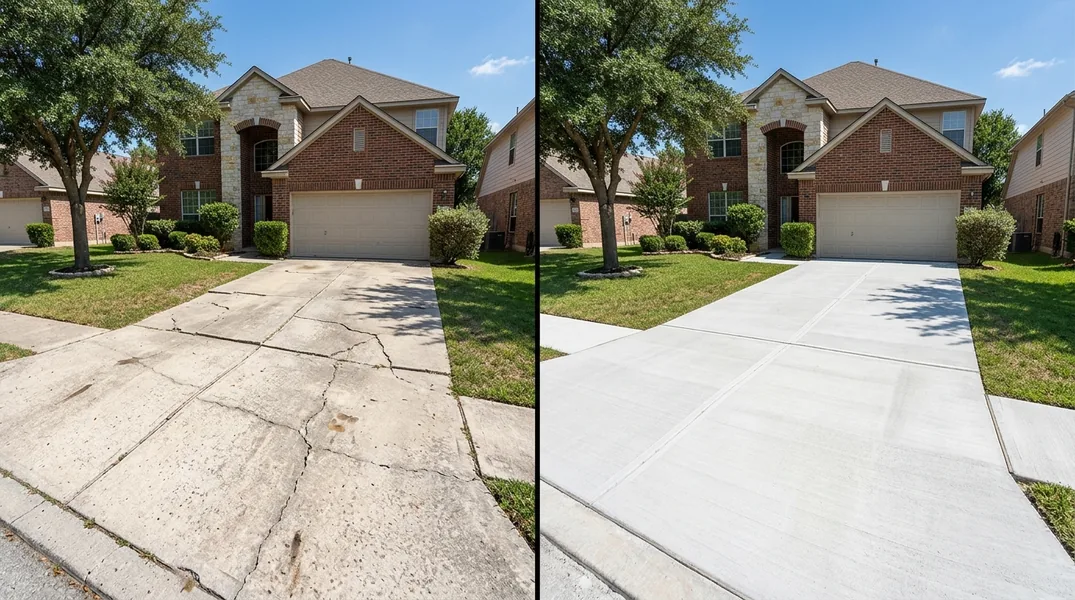
Why Timing Matters When Pouring Concrete in San Antonio
If you're planning a Concrete Driveways project or any concrete work in San Antonio, you've probably wondered when the best time to pour is. The answer isn't as simple as picking a random day in spring. Temperature, humidity, and weather patterns all play critical roles in how your concrete cures and ultimately performs over the years.
Most homeowners don't realize that concrete doesn't actually dry in the traditional sense. Instead, it cures through a chemical process called hydration, where cement particles bond with water to create a solid, durable surface. This process is highly sensitive to environmental conditions, especially in a climate like ours. Pour concrete at the wrong time of year, and you could end up with surface cracks, weak spots, or premature deterioration that requires expensive Concrete Repair & Resurfacing down the road.
Fall and Spring: The Ideal Windows for Concrete Pours
If you want to maximize the quality of your concrete installation, fall and spring are genuinely your best bets in San Antonio. During these seasons, temperatures typically range from the mid-60s to low 80s Fahrenheit, which is the sweet spot for concrete curing. The concrete reaches its initial set without the stress of extreme heat, and the moderate conditions allow contractors to work at a steady pace without rushing or making compromises on quality.
Fall, particularly September through November, offers some of the most consistent curing conditions. Overnight temperatures remain warm enough to support proper hydration, but the intense summer heat has broken. Spring, from March through May, provides similar advantages, though you'll want to avoid early spring if there's still a chance of frost at night. Frost can damage freshly poured concrete by causing the water in the surface to freeze and expand, creating spalling and surface deterioration. The key is choosing a window when nighttime temperatures stay consistently above 50 degrees Fahrenheit.
Pouring Concrete in Hot Weather: Challenges and Solutions
Let's be honest: many San Antonio homeowners don't have the luxury of waiting for perfect weather. If you need your Concrete Patios or driveway done during summer, it's absolutely possible, but you need to understand the challenges. When pouring concrete in hot weather, the concrete sets much faster than it would in moderate temperatures. This rapid setting can trap air bubbles near the surface, reduce the concrete's strength, and increase the risk of surface cracks forming as the top dries before the interior has fully cured.
The good news is that experienced contractors have proven strategies to manage summer concrete pours successfully. They often schedule work early in the morning or late in the afternoon to avoid the peak heat of midday. They may also use cooler water in the concrete mix, add chemical retarders to slow the setting time, and cover the freshly poured concrete with protective barriers to reduce evaporation. Proper curing in heat requires more attention and sometimes more expense, but it's not impossible. If you're considering a summer project, getting a free estimate from San Antonio Concrete will help you understand the specific measures needed for your job.
Summer Concrete Pour Texas: What Homeowners Should Know
Texas summers are notoriously hot, and San Antonio is no exception. Daytime temperatures regularly exceed 95 degrees Fahrenheit from June through August, and sometimes climb into the low 100s. This extreme heat accelerates the concrete curing process to the point where it becomes a liability rather than an advantage. The concrete's surface can dry and harden in just a few hours, while the interior is still curing. This differential curing rate creates internal stress that manifests as cracks, crazing (fine surface cracks), and reduced durability.
Another challenge specific to Texas summers is humidity, or rather, the lack of it. San Antonio's dry heat means that moisture evaporates rapidly from the concrete surface. For proper curing, concrete needs to retain adequate moisture throughout the hydration process. When summer heat pulls moisture away too quickly, the concrete doesn't develop its full strength potential. Professional contractors working on summer pours often use wet burlap, plastic sheeting, or specialized curing compounds to slow evaporation and maintain the right moisture balance. If you're planning Stamped & Decorative Concrete work that requires precision and aesthetic perfection, summer becomes even more challenging because rapid setting reduces the window for finishing work.
Concrete Curing in Heat: Best Practices for Success
If you're committed to pouring concrete during warmer months, understanding the fundamentals of concrete curing in heat is essential. The first 24 to 48 hours are absolutely critical. During this period, the concrete is most vulnerable to damage from rapid drying, excessive heat, and physical disturbance. Professional contractors will keep the surface moist by misting it with water or covering it with wet blankets and plastic sheeting. This isn't just a nice-to-have step; it's a requirement for achieving proper strength and durability.
The curing process actually continues for much longer than the initial two days. Full strength development in concrete typically takes 28 days, though the concrete becomes usable after about a week. During the entire curing period, consistent moisture and moderate temperatures support optimal hydration. In hot weather, this means protecting your new concrete from direct sun exposure, maintaining surface moisture, and avoiding heavy traffic or loads until the concrete has fully set. If you're unsure about the best approach for your specific project, calling San Antonio Concrete at (210) 399-8031 connects you with professionals who handle heat-related curing challenges regularly.
Planning Your Concrete Project: When to Call the Professionals
The bottom line is this: the best time to pour concrete in San Antonio depends on your timeline, budget, and specific project requirements. If you have flexibility, aim for fall or spring when conditions are naturally favorable. If you're working with a tight deadline or summer is your only option, work with an experienced contractor who understands the local climate and has proven techniques for managing heat and rapid curing.
San Antonio Concrete has years of experience scheduling and executing concrete projects in every season. Whether you're planning Concrete Driveways, patios, or decorative installations, timing is one factor among many that affects your final result. Quality workmanship, proper materials, and appropriate curing methods matter just as much as the season. Don't let uncertainty about timing delay your project. Reach out to San Antonio Concrete today at (210) 399-8031 or request a free estimate to discuss your timeline and get professional recommendations tailored to your specific situation. Our team serves the greater San Antonio area and is ready to help you make the right decision for your concrete investment.
Looking for a professional concrete contractor in San Antonio? San Antonio Concrete responds fast for all your concrete needs.
Get a Free QuoteOur services: Concrete Driveways · Concrete Patios · Stamped & Decorative Concrete