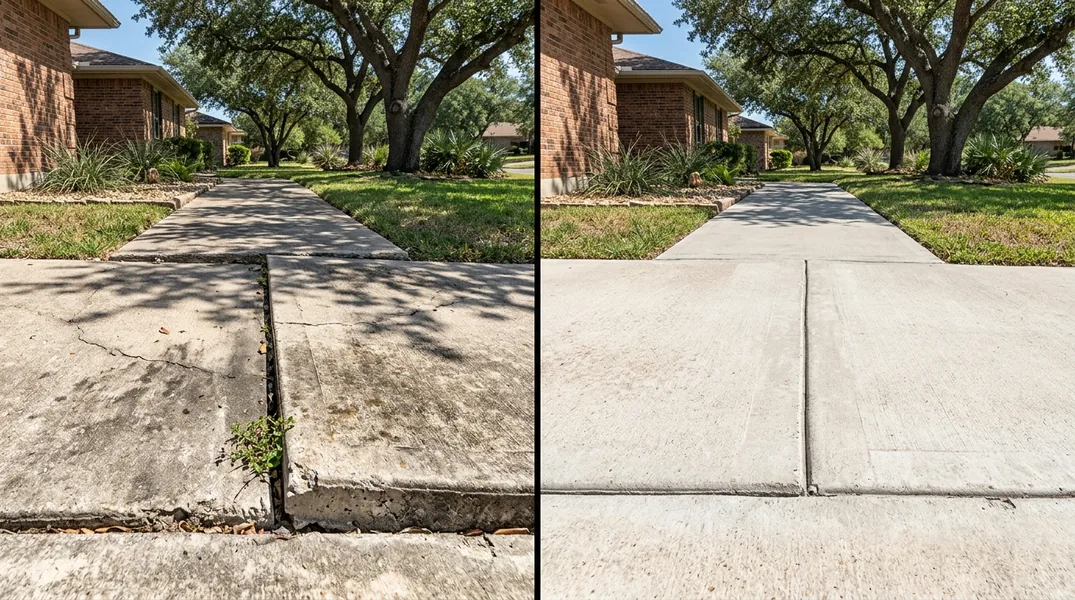
Understanding San Antonio's Unique Soil Composition
If you've ever tried to install a Concrete Driveways in San Antonio, you know that the ground beneath your feet tells a story. That story is one of geological complexity. The soil in and around San Antonio is fundamentally different from what you might find in other parts of Texas or the country. Three primary soil components dominate the landscape: caliche, limestone, and expansive clay. Each of these materials presents distinct challenges for anyone planning to pour concrete, whether for a driveway, patio, or other structure.
Caliche, also known as calcrete or hardpan, is a cement-like layer of calcium carbonate that forms just below the surface of the soil. It's essentially nature's concrete, created over thousands of years as mineral-rich water percolates through the earth and deposits calcium. In San Antonio, caliche layers can range from a few inches to several feet thick. While caliche provides a certain level of stability, it also creates problems. When you try to excavate for a foundation, caliche is extremely hard and expensive to break through. More importantly, if it's not properly prepared, it can create an unstable base for your concrete, leading to cracking and settling issues down the road.
Caliche Soil and Concrete: A Problematic Relationship
Caliche presents a paradox for concrete contractors. On the surface, it seems like an ideal base. It's hard, it's stable, and it's already there. However, this hardpan layer actually creates significant problems for concrete installation. When caliche isn't properly broken up and compacted, it can act as a barrier that prevents proper drainage and creates an uneven foundation. Water that should drain away from your concrete instead pools on top of the caliche layer, leading to freeze-thaw cycles that cause cracking and deterioration, especially during San Antonio's occasional cold snaps.
The real issue is that caliche is impermeable. This means water cannot pass through it easily. If your concrete is poured directly on caliche without proper preparation, moisture becomes trapped beneath the surface. Over time, this moisture causes the concrete to weaken from below. Additionally, caliche can shift and settle unevenly, particularly if there are voids or softer areas within the layer. This uneven settling translates directly into your concrete, creating cracks that start small but grow larger with each season. Proper soil preparation, which involves breaking through caliche and creating a stable, well-draining base, is absolutely essential for long-lasting concrete in the San Antonio area.
Expansive Clay: The Hidden Threat to Your Concrete
Perhaps the most insidious threat to concrete in San Antonio comes from expansive clay, also known as montmorillonite clay. This type of soil has a remarkable property: it expands when wet and contracts when dry. This expansion and contraction cycle is not gentle or minor. During heavy rains or irrigation, expansive clay can swell significantly, pushing upward with tremendous force. Conversely, during dry periods, it shrinks, creating voids and gaps beneath your concrete. This constant movement is one of the primary reasons for Concrete Repair & Resurfacing projects throughout the region.
San Antonio's climate, with its hot, dry summers and occasional wet winters, is perfectly suited to trigger expansive clay problems. Homeowners often notice that their concrete driveways develop significant cracks in a pattern that looks almost like a map. These aren't random cracks caused by poor concrete quality or installation. They're the result of the underlying soil literally moving beneath the surface. The concrete is simply responding to the foundation shifting beneath it. When expansive clay is present, conventional concrete installation methods often fail because the base itself is unstable. This is why experienced contractors in San Antonio prioritize soil testing and preparation before any concrete is poured. Without addressing the expansive clay issue, even the best concrete will eventually crack and fail.
Limestone and Its Impact on Concrete Durability
Limestone is abundant throughout the San Antonio region and forms a significant part of the local geology. While limestone is a natural material that seems stable, it presents its own set of challenges for concrete work. Limestone can dissolve slowly in acidic groundwater, creating voids and cavities beneath the surface. These subsurface voids, though they may take years to develop, can eventually cause concrete to settle and crack. Additionally, limestone deposits are often uneven and fractured, meaning that the bearing capacity of your foundation varies from one spot to another.
The presence of limestone also affects how water moves through the soil. Limestone is somewhat permeable, but it's also prone to creating underground channels and weak points. When you're preparing the ground for Concrete Patios or other concrete structures, limestone requires careful assessment. Some limestone is stable enough to serve as a base, while other limestone deposits are too fractured or soft to provide adequate support. This is why a professional site evaluation is so important in San Antonio. A contractor who understands the local geology can identify limestone issues before they become problems and recommend appropriate solutions, such as deeper excavation, additional base preparation, or specialized reinforcement techniques.
Why Proper Soil Preparation Is Non-Negotiable in San Antonio
Given the complexity of San Antonio's soil composition, proper soil preparation isn't just a best practice. It's absolutely essential for concrete that will last. The process begins with a thorough site evaluation to identify which soil types are present and how deep they extend. This might involve soil boring, testing, or visual assessment by an experienced professional. Once the soil composition is understood, the contractor can develop a preparation strategy tailored to your specific property.
Proper soil preparation typically involves removing unsuitable material, breaking through caliche layers if necessary, addressing drainage issues, and creating a compacted base that will support the concrete evenly. For expansive clay situations, this might include removing the problematic soil entirely and replacing it with engineered fill, or using specialized foundation systems designed to accommodate soil movement. For caliche, breaking it up and properly compacting it creates a more stable base. The investment in proper soil preparation almost always pays for itself by extending the life of your concrete significantly. Skipping this step or doing it poorly is one of the most common reasons homeowners end up needing Concrete Repair & Resurfacing work within just a few years of installation.
Preventing Concrete Cracking: What San Antonio Homeowners Should Know
Understanding why concrete cracks in San Antonio is the first step toward preventing it. The soil conditions we've discussed, combined with the region's weather patterns, create a perfect storm for concrete problems if proper precautions aren't taken. The good news is that with the right approach, you can install concrete that remains sound for decades. This starts with choosing a contractor who understands San Antonio's specific challenges and has experience working with local soil conditions.
When you're planning a concrete project, whether it's a new driveway or Stamped & Decorative Concrete for your patio, don't hesitate to ask potential contractors about their soil preparation process. Ask them how they handle caliche. Ask them about expansive clay testing. Ask for references from other San Antonio homeowners. A contractor who takes soil preparation seriously will welcome these questions and be able to explain their process in detail. If a contractor seems to minimize the importance of soil prep or promises quick installation without thorough site evaluation, that's a red flag. San Antonio Concrete has been serving the San Antonio area for years and understands these local soil challenges intimately. When you're ready to discuss your concrete project and get a free estimate, call us at (210) 399-8031. We'll evaluate your specific site conditions and recommend the best approach to ensure your concrete lasts.
Looking for a professional concrete contractor in San Antonio? San Antonio Concrete responds fast for all your concrete needs.
Get a Free QuoteOur services: Concrete Driveways · Concrete Patios · Stamped & Decorative Concrete